Regional expansion
Extended the publication's footprint across three council areas, with distribution spanning businesses, libraries, community houses, health services, visitor centres and local retailers.
Community leadership · North West Tasmania
I am President and operational lead of The Coastal Voice, a free monthly community newspaper. The work brings together residents, councils, government representatives, community groups and local businesses across Tasmania's North West Coast.
It is practical community engagement: listen carefully, test claims, explain decisions, maintain relationships through disagreement, and build systems that keep participation possible month after month.
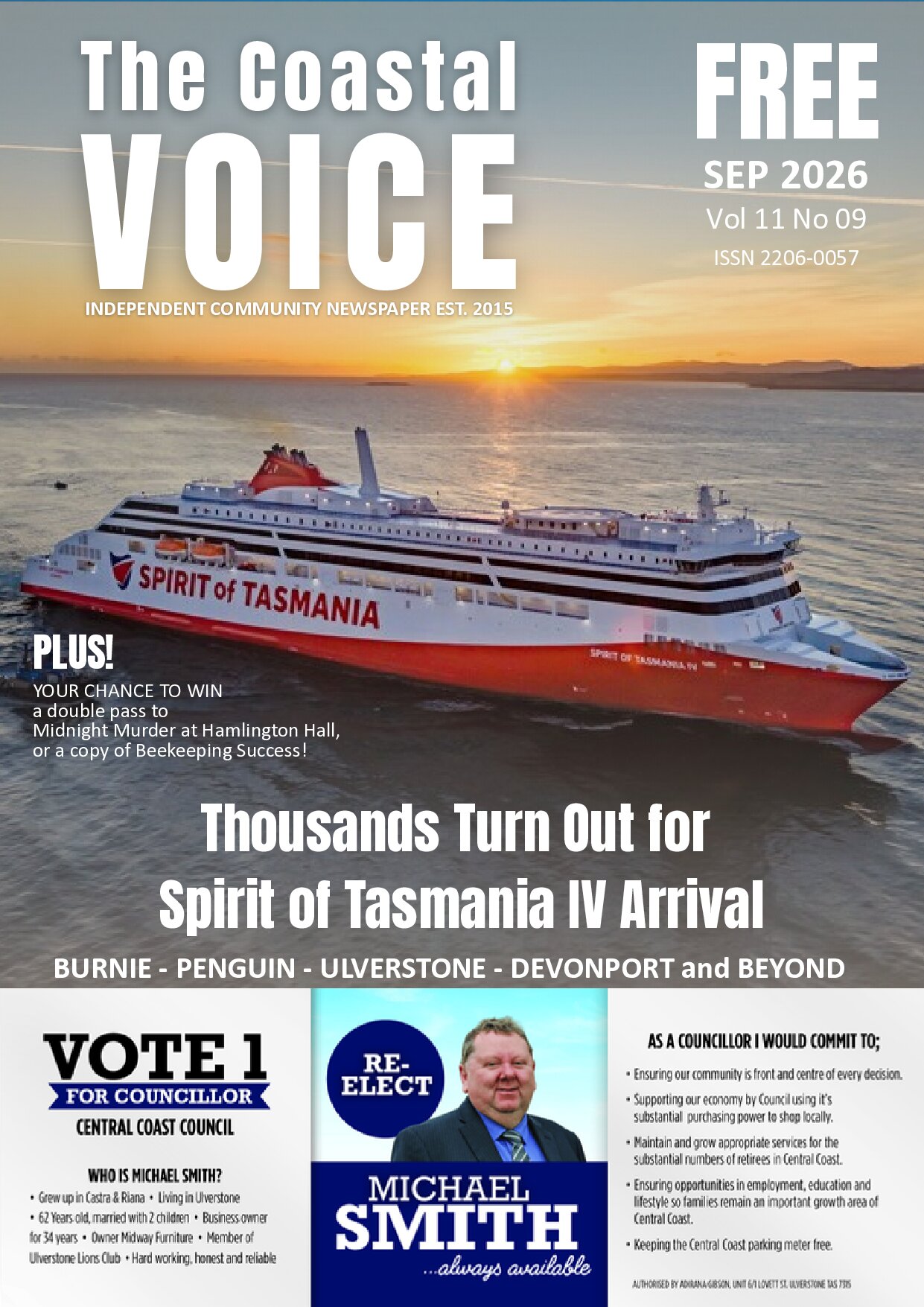
Print and digital publication
Council areas now reached
Towns with listed pickup points
Community access
The operating case study
Under my leadership, The Coastal Voice expanded beyond the Central Coast Council area into Burnie and Devonport, formed a new team and became a more active presence across the region.
Extended the publication's footprint across three council areas, with distribution spanning businesses, libraries, community houses, health services, visitor centres and local retailers.
Built a new contributor team and established practical workflows around submissions, editorial review, advertising, accounts, production and monthly distribution.
Maintain a free print and digital channel where residents, clubs, organisations and businesses can share local news, events, services and positive contributions.
Introduced AI tools into editorial and distribution workflows to reduce repetitive work while preserving human judgement, attribution and accountability.
Editorial judgement
Community publications regularly receive opinion pieces on complex or contested subjects. Editorial decisions must protect readers and the publication's independence while treating contributors fairly and keeping constructive dialogue open.
Relationships
The publication depends on relationships that remain useful after a difficult conversation or a missed deadline. My role spans listening, explanation, coordination and follow-through.
Civic participation
I have stood as an independent candidate in local council and NSW elections. That experience required public speaking, community listening, policy communication and direct engagement with local political dynamics, without the support or constraints of a political party.
It strengthened my ability to explain a position plainly, hear opposing views, respond under scrutiny and work constructively across political perspectives. My community work remains non-partisan and focused on useful local outcomes.
The infrastructure bridge
My data-centre career gives me the technical grounding to discuss critical infrastructure accurately. My community leadership gives me the judgement to translate that detail into clear, locally relevant information, surface concerns early and avoid treating engagement as an announcement made after the decisions are finished.
Community and infrastructure
I bring operational knowledge, regional community leadership and the ability to communicate clearly when the subject is technical, contested or still taking shape.